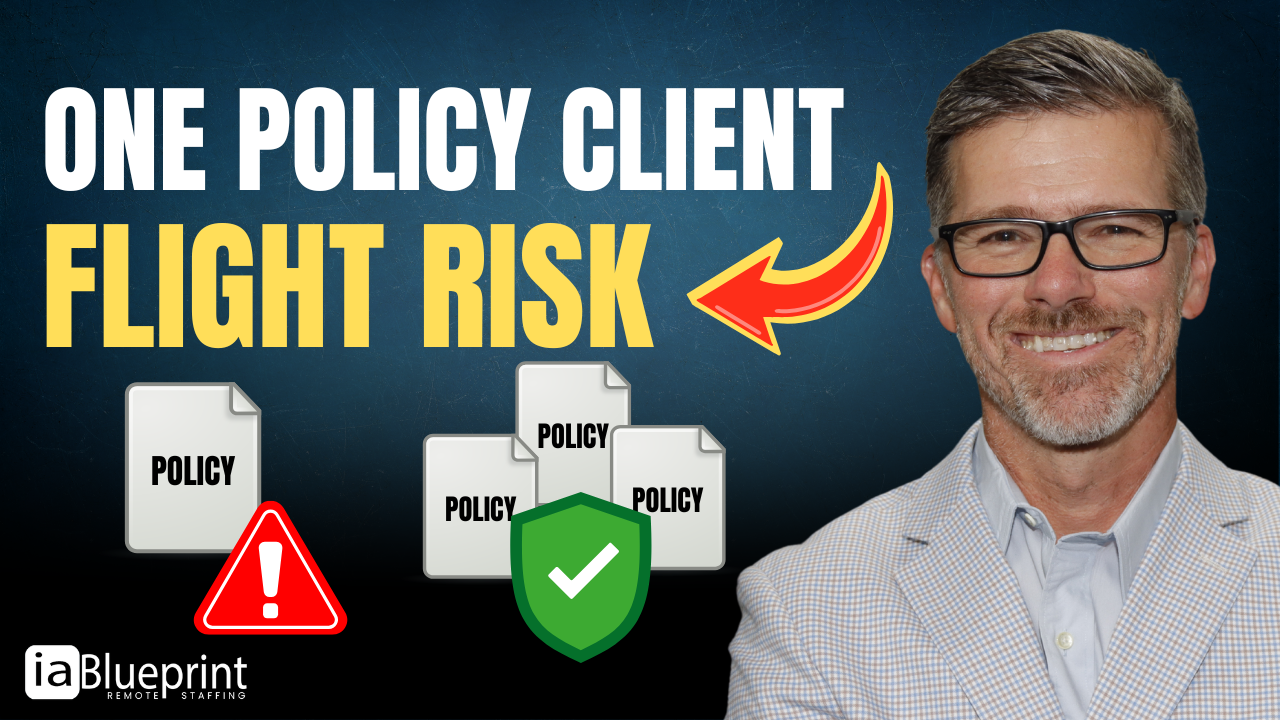
Pull up your book and count the clients with exactly one policy.
Now reframe every one of them. A one-policy client isn’t a small client. A one-policy client is a flight risk.
One policy means one renewal a year — one single moment where a price bump can end the relationship. One thin thread to your agency. No bundle holding them. Leaving is one phone call.
Three policies? Three renewals keeping you in front of them. A bundle working in their favor. Switching means moving everything and probably losing money to do it. They’re not going anywhere.
Cross-selling isn’t a sales activity. It’s a retention activity that happens to pay you.
My friend Chip — the two-person, $3.5 million agency — averages over two policies per client. That’s half the reason his retention sits at 95.
So why doesn’t every agency round out accounts? Because cross-selling is important-but-never-urgent, and it’s the first thing that dies in a busy season. Nobody has time to hunt monolines and start conversations.
Which is exactly why it can’t depend on somebody having time.
Your EZLynx data already knows who’s monoline. Build the watchlist: auto-only clients get the soft home touch. Home-only gets the auto version. The renter whose address changes to a mortgage gets a note at exactly the right life moment. Not a blast — your own data telling you who to talk to, firing whether your Tuesday is calm or on fire.
Every monoline that becomes two lines pays you twice: revenue now, retention for years. It’s the only move that works both doors at once.
Count your monolines this week. That’s your opportunity, sitting in your own book, waiting for a system.
Get the watchlist built — www.iablueprint.com/ezlynx-automation